
By: Kaylee Spiva and Camille Samilton
November 4, 2026
A newborn baby wails in your arms, demanding in its foreign language to be fed. You look toward the instructions on a can of Nestlé Infant Formula: Just add water!
Breaking news flashes across the glass screen—the powder in your hand is now mixed with a decade-long controversy.
Nestlé was a household name notorious for comfort and care, earning the trust of millions of families worldwide, especially new mothers. Many people looked at it as a new form of modern nutrition for their young. Yet, behind this portrait of domestic warmth, wealth, and power, a silent tragedy was unfolding across the world.
Reports started flooding in from thousands of families all over the country, families who were concerned that Nestlé’s baby products were causing sickness and developmental differences in babies. However, we couldn’t yet understand why this was happening.
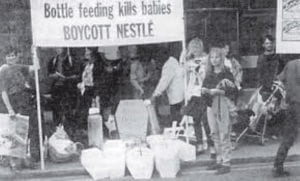
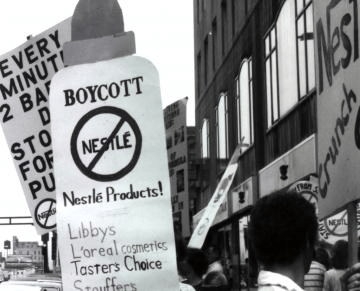
On July 4, 1977, The Minnesota INFACT (Infant Formula Action Coalition) officially launched the Boycott Act against Nestlé. This organization backed itself up with sources claiming that manufactured breast milk substitutes were the factor for causing sickness to fall on infants.
In January of 1984, the result of this boycott moved Nestlé to abide by the WHO
Marketing code, leading INFACT and international groups to formally end the 6.5-year U.S. boycott.
Allegations of child labour and workers rights abuses have attacked Nestlé for years. In 2001, Nestlé signed The Harkin-Engel Protocol, a voluntary agreement by members of the cocoa industry and politicians to work towards ending the worst forms of child labour.
The case has been tied up in the appellate courts for years, and the companies have recently stated their intention to take the child workers’ successful appeal in the 9th Circuit Court of Appeals to the U.S. Supreme Court.
Commenting on the findings, Terry Collingsworth said the report challenged corporate assurances that chocolate manufacturers were dealing with the problem of child labour.
The Fair Labor Association (FLA), commissioned by Nestlé, saw researchers visit 260 farms used by the company from September to December, 2014. Researchers found 56 workers under the age of 18, of which 27 were under 15. Years later in 2015, Nestlé began feeling persistent pressure from the public and campaign networks.
Nestlé dropped its long-standing “natural start” marketing claim for baby formula. Baby Milk Action argued that the phrase misled parents into thinking formula was a natural equivalent to breastfeeding.
In November of 2015, an investigation and lawsuits revealed labor abuses and human trafficking within Thai seafood supply chains connected to Nestlé and pet food brands such as Fancy Feast. Nestlé publicly acknowledged and investigated these supply chains.
Nestlé has repeatedly stated their commitment to tackling child labour in its supply chain, but the question still remains: Are Nestlé products today actually safe?

