
By: Camille Samilton
September 30, 2026
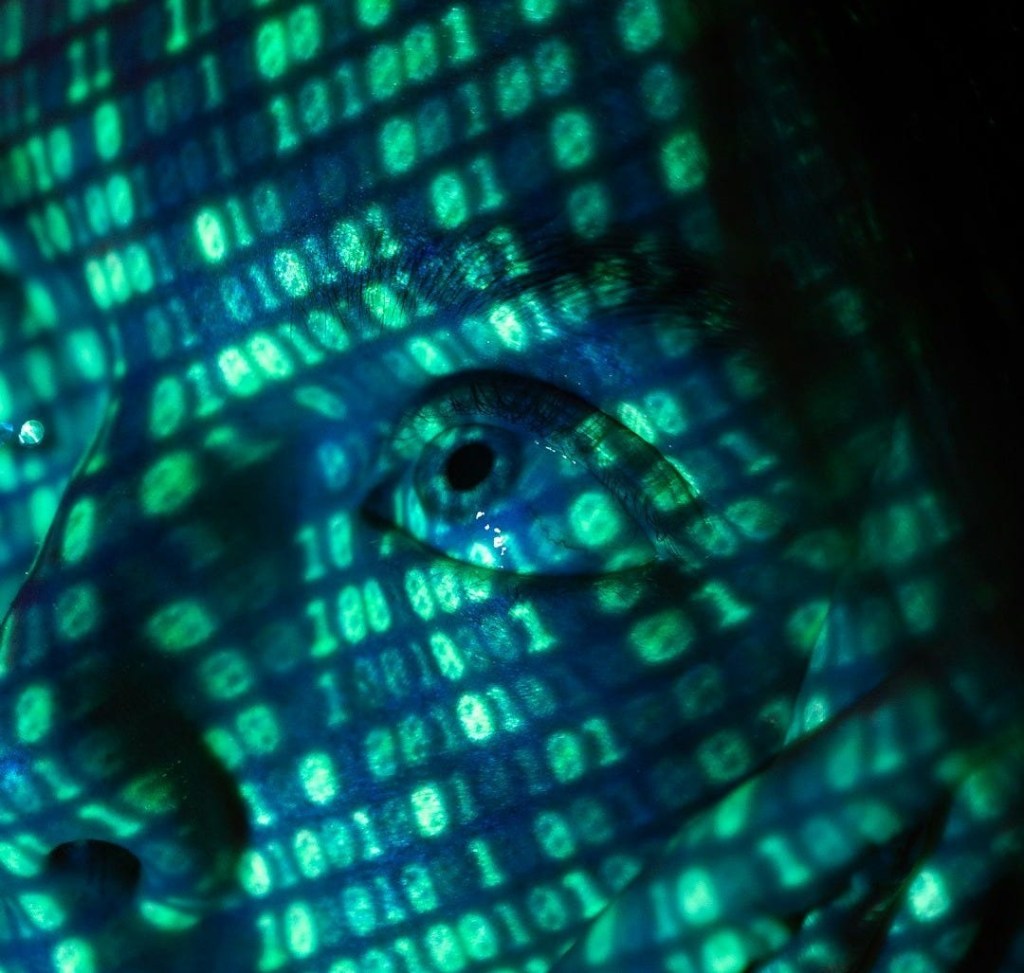
Dear Camera, don’t you recognize me? Don’t you scan my face everywhere I walk?
You walk into a store, a camera blinks (almost absent-mindedly) at you, but you look away and think nothing of it. Still, that circle keeps zooming in on me.
Facial recognition (FRT) scans your face, analyzing your features in a similar way police might take your fingerprints. But unlike fingerprints, the process can happen without you realizing it to be unnoticeable.
This technology is commonly used to unlock phones, to check passports, and to track people when they enter a place, which is especially common in retail stores.
According to Auror, retail stores scan faces based on a pre-made (biometric) template of a criminal’s face and compare it to the one that walks through the store. The scan is passive, immediately deleting non-match data after confirmation.
Artificial Intelligence (AI) has led to significant advances in facial recognition technology. WGU tells us that when AI scans someone’s face, they measure the 3D face vectors and skin texture analysis, along with a newer addition: Thermal cameras, which record the size and shape of the head, ignoring accessories such as earrings and glasses.
The AI used determines a confidence score. If it’s high enough, that’s when a human steps into the scene. Because of this technology, Auror says it has stopped 42 percent of repeat offenders.
As technology advances, those same cameras zoom in on faces, but pieces of data can turn into bias.
According to the MIT Media Lab, a study of commercial AI facial-analysis systems found error rates as high as 34.7 percent for darker-skinned women compared with a maximum of 0.8 percent for lighter-skinned men when classifying gender.
The consequences can stretch beyond being misidentified by the pattern recognizer. Research and documented cases have raised flags of concern about Black people being incorrectly identified, entered into databases, or subjected to increased targeted, police monitoring.
Auror extends this with continuous research that cites Black people starting to be arrested for minor crimes, planting their faces in databases, along with an abundance of these facial recognition cameras in Black and Brown neighborhoods.
In addition to this, the Innocence Project has reported that Robert Williams was the first documented case of a wrongful arrest in 2020 due to facial-recognition technology. He was charged with stealing Shinola watches worth thousands of dollars.
The ACLU argues that certain uses of facial recognition raise Fourth Amendment concerns (protects against unreasonable searches) because of the risk of innocent victims being searched. The ACLU has also argued that facial recognition technology is starting to cause people not to exercise their First Amendment rights. Some people have been scared to protest, afraid they will be documented by this technology if they do so.
The camera continues to blink at you—your figure reflecting on the screen—and your mind twists, wondering what exactly it sees.

