By: Tyler Elzholz, Jaiden Basinger, and Jose Nazario
February 22, 2022
This past Saturday, the Lady Hurricanes traveled to Mapleton High School for a sectional final game pairing two, evenly-matched teams.
In the first quarter, the Lady Canes and Lady Mounties traded baskets, turnovers, and defensive stops. In a relatively quick-paced opening quarter, the Lady Mounties took a one-point, 13-12 lead after eight minutes of play.
In the second quarter, the Lady Canes started off fast and played great defense which jump-started a 9-0 run to give them a 21-13 lead. However, the Mounties matched the Lady Canes 9-0 run with a 9-0 run of their own to take a 22-21 halftime lead.
Coach Jon Holko stated: “At halftime, the goal was to stick to our game plan and to clean up some aspects of our rebounding and turnovers. We were right there but just couldn’t sustain a second half run, and they (the Lady Mounties) made a couple of less mistakes when it mattered most.”
In the third quarter, the offensive struggles continued for the Lady Canes. Turnovers, missing wide-open looks, and not rebounding the ball on the offensive glass enabled the Lady Mounties to stretch their lead to seven points by the end of the quarter, 35-28.
Despite the scoring struggles, the Lady Canes found themselves down by just four points with ten seconds to go in the game, but a missed lay-up attempt to cut the lead to two sealed the deal for the host Lady Mounties.
Final score: Mapleton 45, Brooklyn 39.
“We had our chances but didn’t capitalize. Even though this loss stings and my heart breaks for the seniors (Savannah David and Gwen Spaliatsos), these girls have nothing to be ashamed of. This year, three records were broken, we gave Trinity their only CVC loss, and we finished with 15 wins. We have a lot to be proud of.”
With the loss, the Lady Canes were eliminated from playoff contention, but as Coach Holko stated, an overall record of 15-8 is terrific.
Hurricane Nation would like to congratulate the Lady Canes on all of their hard work and successes this season. With six of the eight varsity players returning next year, the best is yet to come!
The girls basketball program would like to wish the boys varsity basketball team the best of luck tonight as they host Wooster Triway in the sectional semi-finals. Tip off is at 7:00.
History goes beyond what is written in the history books. There are so many things in history that we do not know enough about, and it is important as a district that we begin having more in-depth information and conversations about how the past affects the world that we live in today.
In the United States, there are many history months that are celebrated including Black History Month (currently), Asian American and Pacific Islander Heritage Month, LGBTQ+ History Month as well as Pride Month, National Latinx Heritage Month/Hispanic Heritage Month, Native American (Indigenous) Heritage Month, Women’s History Month, along with many more.
It is important to not only learn about history during the month that it is celebrated but to learn throughout the entirety of the year about how history not only shapes the world but how it shapes the people affected by it.
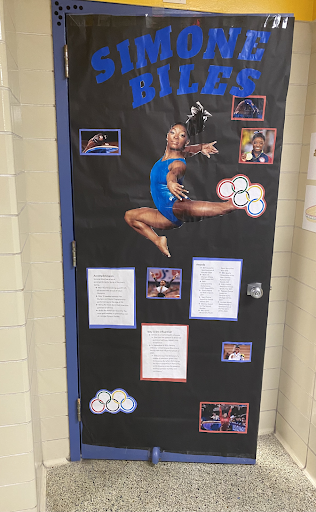
During this February, Brooklyn High School celebrates Black History by having students research Black historical/influential figures, creating presentations, as well as displays throughout the hallways that showcase contributions and accomplishments that had a major impact on history.
{Pictured above are displays of Simone Biles, Larry Doby, Alice Walker, and Amanda Gorman, just a few of the many displays of historical/influential figures throughout BHS.}
Although this is a good first step, there needs to be a continuous effort put forth year-round, not only to express the importance but to learn about a lot of history untold.
Brooklyn City School District Superintendent, Dr. Theodore Caleris, states: “What I want most for our school community is to celebrate the diversity of all of our students and staff. One of the greatest characteristics of our community is that we represent so many unique and diverse nationalities and ethnicities. Through our strategic planning process, the district plans to take a look at how all students and staff are represented in our school district.”
History is still continuing to happen every single day. School should be a place to expand your knowledge, be in an open environment to have in-depth and important conversations, and to help create change in the world.
We, as students, will continue to work with the administration to make further improvements to our school district to ensure that students feel represented and listened to on a daily basis.
Bessie Coleman was the first African American woman to hold a pilot’s license. Equally important, she was the first Native American person to hold one, as well. She excelled greatly as a civilian aviator and spent much of her flight career performing airshows.
Elizabeth (Bessie) Coleman was born in Atlanta, Texas, on January 26, 1892. She was born to Susan Coleman, who was African American, and George Coleman, who was African American and also Cherokee. She grew up with twelve siblings, with her being the tenth of the thirteen children. Ultimately, only eight of her siblings survived their childhood.
Shortly after Coleman’s birth, her family moved to Waxahachie, Texas. She grew up on sharecropping farmland with her family while attending a small, segregated school. She farmed cotton with her family throughout her childhood as part of supporting their lives as sharecroppers. In 1901, her father left the family to move to modern-day Oklahoma on Native American land to find better opportunities for himself.
At age 12, Coleman was accepted into and started attending the Missionary Baptist Church School on a scholarship that she had earned. When she turned 18, she began attending the Oklahoma Colored Agricultural and Normal University (now known as Langston University) in Langston, Oklahoma. She only completed one term before she ran out of money and had to quit her academic pursuits.
In 1915, she moved to Chicago, Illinois, with some of her brothers. While there, she worked as a manicurist and also worked as a manager at a chili parlor to help her save money for her newfound dream of becoming a pilot. She ended up being in contact with Robert S. Abbott, the founder of the newspaper (The Chicago Defender). Abbott, as well as businessman Jesse Binga, helped Coleman fund her flight school dreams and were a driving force in her being able to study abroad to get her pilot’s license.
Because there were no flight school options for African Americans, Native Americans, and women in The United States (with Coleman being a combination of all three), she saved for and gained sponsorships to be able to attend flight school in France. To prepare for her trip, she took a French language class at the Berlitz Language School in Chicago. She traveled to Paris, France, to officially begin her flight training on November 20, 1920. She spent a considerable amount of time in France for pilot training.
With commercial flights still being over a decade away, Bessie realized in order to keep her position as a civilian aviation professional that she would have to become what is called a “Stunt Flier”. Becoming a stunt flier would require her to take advanced lessons. After returning to Chicago, she had no luck finding someone willing to teach her. In February of 1922, she sailed back to Europe. She spent two months there completing an advanced course in aviation. She also traveled to Germany, where she visited the Fokker Corporation and received additional training from one of the company’s chief pilots. After all her flight training was completed, she returned to the U.S. to start her career in exhibition flying.
Over the course of the next five years, Bessie created a name for herself being known as “The World’s Greatest Woman Flier”. Drawing such high popularity to herself, she was invited to important events and often interviewed by journalists. “Queen Bessie” was admired by all. She made her first appearance in an American airshow on September 3, 1922, at an event honoring veterans of the All-Black, 369th Infantry Regiment of World War I. Six weeks later, she participated in another Chicago air show to honor World War I’s 370th Infantry Regiment.
In Los Angeles, she broke a leg and three ribs when her plane stalled and crashed on February 22, 1923. As a professional aviator, Coleman often would be criticized by the press for her opportunistic nature and the flamboyant style that she brought to her exhibition flying, but nothing could stop her from losing sight of her childhood dreams.
Committed to promoting aviation and combating racism, Coleman spoke to audiences across the country about the pursuit of aviation and goals for African Americans. She absolutely refused to participate in aviation events that prohibited the attendance of African Americans.
On April 30, 1926, Bessie Colman passed away. She had recently purchased a Curtiss JN-4 aircraft that had been poorly maintained. While her friends and family tried to encourage her not to fly the plane, she refused and did so anyway. Ten minutes into the flight, the plane took a dive and spun 3,000 feet towards the ground. Colman was thrown out of the plane at about 2,000 feet, instantly killing her at the age of 34.
Her legacy as a public figure and media sensation, as well as her outstanding achievements as a pilot, made Bessie Coleman one of the greatest pilots to have ever lived.
Chosen for this week’s Staff Spotlight is Mrs. Laura Paul! Mrs. Paul is currently the secretary at the Brooklyn School and has been working with the BCSD for 16 years. Previously, she worked as the secretary at the former elementary school known as Brookridge along with working at the old middle school (before the new building was constructed). Mrs. Paul has always been known for her kind and friendly personality, and she never fails to put a smile on people’s face.
Q: Describe your roles as secretary for the Brooklyn School.
A: “We just make sure, as a whole, that the building gets off to a good start, and we continue the good day throughout to meet the needs of students, staff, and teachers.”
Q: If you could switch your occupation, what would you change it to and why?
A: “I would probably be a teacher because I like being in the school, and I just like being around the students.”
Q: What are some of the pros and cons about working as the secretary in the Brooklyn School as opposed to working at the old middle school and Brookridge Elementary?
A: “The pros are that I have the same grades together at one time, so it’s the best of both worlds. The cons are having to do double the work.”
Q: What are some of your favorite memories working in the Brooklyn City School District?
A: “I loved working with Mr. Russo and Mr. Caleris; we laughed all of the time. Also, Mr. Yarman at Brookridge was just an incredible leader. Now, it’s fun because some of the kids I previously had years ago are the parents of the kids who I currently have.”
Q: How would you describe yourself using only three words?
A: “I think I’m smart, friendly, and I hope I’m kind.”
Q: What is your stress meal?
A: “Lately, my stress food has been Hershey Kisses.”
Q: What are some of your favorite hobbies?
A: “I love to read, play with puppies, and do crossword puzzles (also known as anagrams, New York Times, and puns). Super challenging!”
Q: Did you watch the Super Bowl? If so, what was the best part: the commercials, the halftime show, or the game itself?
A: “I watched the Super Bowl, and I would have to say the game was the best because I won money on the football squares!”
Thank you so much for allowing us to interview you, Mrs. Paul. You are a wonderful person, and your hard work does not go unnoticed. Your smile brightens up the room.
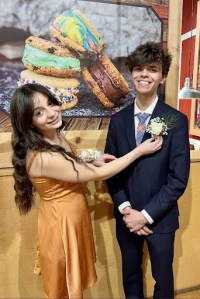
Last Friday (February 11), Brooklyn High School held a Valentine’s Day inspired Winter Formal.
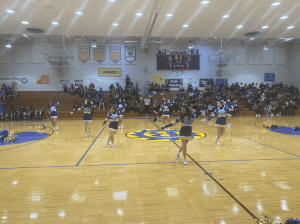
Before the night began, a pep assembly on Friday afternoon got everyone excited for the evening to come.
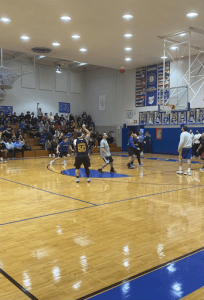
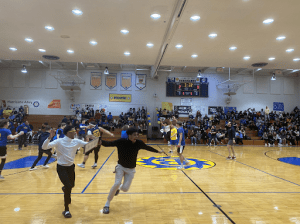
The band marched through the high school hallways, leading everyone to the gym where the faculty/student basketball game began. The faculty prevailed and is making sure that the students never live it down.
Later that evening, the Winter formal was held in the fieldhouse of the PreK-7 building, where music filled the halls and students danced the night away.
Many described this night as a wonderful and fun experience with a great atmosphere.
We want to thank Mrs. Jacinta Bader and the Student Council for all of their hard work that was put into this dance, making sure that it was a magical night for so many!
By: Tyler Elzholz, Jaiden Basinger, and Jose Nazario
February 15, 2022
As the Winter sports, regular seasons conclude, postseason play is right around the corner.
The boys basketball program will finish up their 22-game schedule this week as they host Lake Ridge Academy on Thursday, February 17, followed by a CVC battle at Independence on Friday, February 18.
The team is 11-9 overall (8-1 at home) and 7-6 in the CVC.
Then, on Tuesday, February 22, the boys will begin their playoff push (Bracket) as they host Wooster Triway.
The girls basketball team wrapped up their regular season last night with a hard-fought victory at Kirtland, 42-38.
The girls sectional final playoff game is this Saturday, February 19, and their opponent will be determined tomorrow evening as Wellington travels to Ashland Mapleton. The Lady Canes will take on the winner. Click here for bracket information.
Finally, congratulations to senior Sofia Collins who is advancing to the state wrestling tournament.
Good luck to all Winter sports teams and athletes.
Jesse Owens is considered to be one of the best track and field athletes of all time and is well-known for earning four gold medals at the 1936 Summer Olympics in Berlin, Germany. He also broke several world records for various track and field events throughout his athletic career.
Jesse Owens was the youngest of ten children, born to Henry Cleveland Owen and Mary Emma Fitzgerald in Oakville, Alabama, on September 12, 1913. Early on in his life, he moved to Cleveland, Ohio. He was moving North in hopes of more opportunities and freedom. Owens attended Fairmont Junior High School. While there, he began to realize his passion for running. Owens attributed the success of his athletic career to the encouragement of Charles Riley, his junior high school track coach.
He then went on to attend East Technical High School in Cleveland, Ohio. While in high school, he met his future wife, Minnie Ruth Solomon. Their first daughter was born in 1932, and they went on to get married in 1935, later having two more daughters. They remained married until Owens’ death in 1980.
After high school, he attended Ohio State University. While attending OSU, Owens continued his athletic career and won eight different NCAA championships, four in 1935 and another four in 1936. He became known as the “Buckeye Bullet” for his athletic achievements and speed. Owens strongly solidified his athletic skill at the Big Ten track meet in 1935. During this meet, he broke three world records and tied with a fourth. His world records were in the long jump, 220-yard sprint, and the 220-yard low hurdles. He matched the record time for the 100-yard dash.
Despite original protests from American athletes about participating in the Berlin Olympics due to discrimination going on in Germany at the time were raised, Owens was one of the athletes who raised the concerns. Ultimately, most of the protests were quelled, and the athletes went on to participate in the Olympics.
Upon reaching Berlin, Owens was a well-known name within the Olympics with, allegedly, a large number of German fans waiting to cheer for him. Owens was also quickly approached by the founder of Adidas, Adi Dassler, and offered a sponsorship upon convincing Owens to wear his company’s shoes while competing.
While competing in the Olympics, Jesse Owens won gold in the 100-meter dash with a time of 10.3 seconds, gold for the long jump with a distance of 8.06 meters, and gold for the 200-meter sprint with a time of 20.7 seconds. In the following days, Owens was added to the team for the 4×100-meter sprint relay and went on to win gold for this event as well.
Owens was honored by the German leader Adolph Hitler for his achievements, although there were later reports that Hitler wanted to use the Olympics results as a justification to exclude black athletes from further competitions as they had an “unfair” strength advantage.
Jesse Owens was also notably rejected by President Franklin D. Roosevelt, who did not invite him to the White House to meet him like the other American Olympic athletes were. He was, however, invited to compete in Sweden along with the rest of the American Olympic team. He rejected this offer in favor of endorsements and had his amateur status revoked, which barred him from further participation in the Olympics.
Owens went on with his life with very little success and little-to-no access to actual participation in sports because of his removed amateur status. He took to racing against horses for money, amongst other events, and would struggle financially until being recognized by President Dwight Eisenhower, who allowed him to travel the world under a designation as a goodwill ambassador who would teach people about athletics.
At the beginning of December in 1979, Owens was hospitalized, on and off, with an extremely aggressive and drug-resistant type of lung cancer. He died from lung cancer at the age 66 in Tucson, Arizona, on March 31, 1980, with his family by his side. He was buried at Oak Woods Cemetery in Chicago, Illinois.
Despite the untimely end to his Olympic career, Jesse Owens had a large influence and countless records for track and field events and will be remembered for his outstanding athletic ability.
Chosen for this week’s Staff Spotlight (part two) is Mrs. Fran Meeks! Mrs. Meeks has been working in the Brooklyn City School District for 16 years. She started her very first year in 2006 and has spent the majority of her time working as a Student Monitor and assisting in Special Education. This year, she has been working with our new BDLA program for high school students. If you know Mrs. Meeks, you know her humorous personality, compassion, and very loud laugh.
Q: Who or what inspired you to work as a student monitor?
A: “Honestly, I just kind of did this on my own. When I was asked to do something, I just did what they asked me to do, and here I am.”
Q: What is your favorite part about working at Brooklyn High School?
A: “Definitely the kids, I love working with them. I’m kind of like the ‘school mommy’; everyone kind of knows they can come to me if they need me. A lot of kids seem to feel comfortable talking to me about their situations and telling me personal things to relieve themselves of whatever is overwhelming them.”
Q: What is your favorite memory working as a BHS employee?
A: “Probably my son’s senior year. My son went to school here and just watching him all through his senior year and seeing him do things I knew he would do for the last time was bittersweet.”
Q: In your opinion, what impact have you made on your students?
A: “I guess that the kids just know that I’m here for them when they need me. I’m very supportive, and a lot of kids who know me seem to feel comfortable enough with me to come and talk to me about what is going on in their life. I’ve had a lot of kids ‘come out’ to me because they felt safe sharing that part of their life with me. My son is actually gay, so when these kids ‘come out’ to me, it kind of hits home. All around, I’m supportive.”
Q: Describe your family.
A: “Well, there are only four of us. I’m married, and my husband is a truck driver. I have two sons, one is 43 and my other son is 29. My oldest son works in assisting for a nursing home. My family and I have also lived in Brooklyn for 20+ years, but after my kids moved out, it has just been my husband and me.”
Q: Who is your biggest inspiration and why?
A: “It would have to be my son. I mentioned this before, but my son is gay. I give him a lot of credit for being so brave to come out as gay knowing how scary that can be for anyone. Knowing this, I knew that I had to be there for my child, regardless.”
Q: What is something that you have yet to do in life?
A: “Go to Hawaii. I really want to go and visit there. I also want to go to Disney World. I am probably the biggest Mickey Mouse fan, ever. My hall pass is even Mickey Mouse. I’ve been on the Disney Cruise, but I really want to go Disney in Florida.”
Q: In your free time, what are your hobbies?
A: “Honestly, I don’t really have too many hobbies. I’m a homebody; I love being at home.I typically go home after work and watch TV because I love reality shows. My favorite shows are the ones on TLC. I also really love Hallmark. But aside from being at home, I go to Columbus to see my son once in a while.”
Thank you so much for allowing us to interview you, Mrs. Meeks. You are such a sweet and compassionate woman.
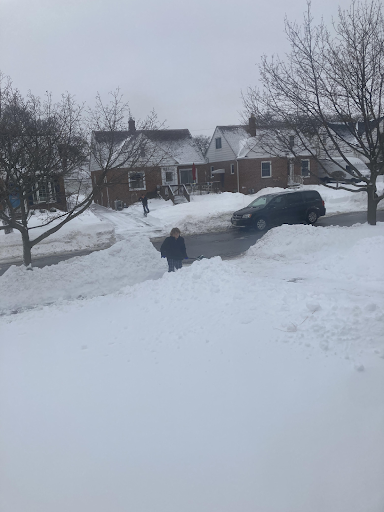
Due to approximately 10 inches of snow last Thursday and Friday, the Brooklyn City School District, along with many schools in Northeast, Ohio, called off school due to the Wintery conditions.
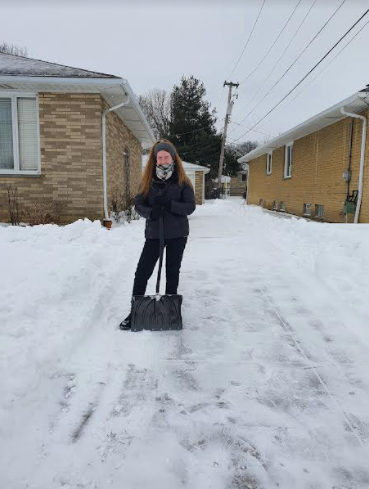
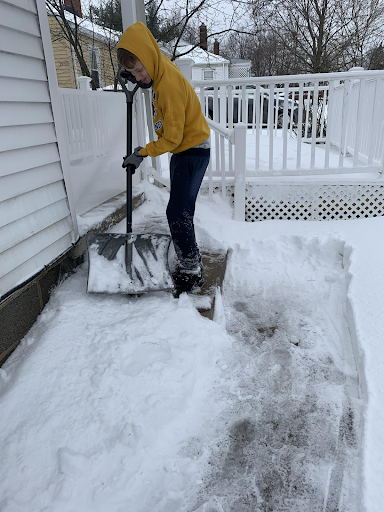
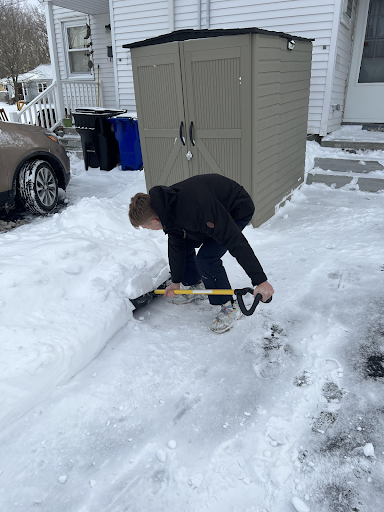
With two consecutive snow days, many BHS students volunteered to shovel the driveways of community members who were unable to do so themselves.
“It’s nice to see Brooklyn High School students helping to make an impact on the community,” said BHS Principal Brian Hare.
Pictured above are BHS students Neele Lamberti (junior), Tyler Cox (freshman), Philip Bartelme-Loepp (junior), and Dylan Smith (sophomore).
The Brooklyn City School District wants to thank all of the students who volunteered. Your donated time and effort helped a lot of our community members.
With examples like this, the ongoing goal is for students and teachers to continue making an impact in the Brooklyn community.
By: Tyler Elzholz, Jaiden Basinger, and Jose Nazario
February 10, 2022
This past Monday, the Lady Hurricanes traveled to nonconference foe Clearview to secure their thirteenth win of the season. With a dominant 58-35 victory, the girls continued their push to the postseason.
In the first half, the Lady Hurricanes started off fast, scoring 30 points and playing excellent defense by holding the Clippers to just 16 points. A team that emphasizes defense, the girls swarmed the Clippers and made them uncomfortable, forcing turnovers and converting them into transition baskets. Offensively, solid screens, ball movement, and execution gave the Hurricanes good looks to which they were able to capitalize.
In the second half, the pace did not slow down for the Lady Hurricanes. The defense was stellar throughout, and even though the offense sputtered at times, the girls outscored the Lady Clippers 28-19 in the second half, securing the 23-point win.
“The girls played a solid game, both offensively and defensively. With Monday games, you never know where the energy and execution levels will be, but we started fast and never allowed Clearview to come back. I’m proud of them. With the final stretch upon us, it is imperative that we continue to grow and play team basketball,” stated Coach Jon Holko
This road victory pushes the girls overall record to 13-6 (9-5 in the CVC).
Junior Genesis Carabollo led the team with 20 points, five steals, and three assists. Junior Shariah Gailes added 16 points and 17 rebounds.
The player of the game, however, was senior Gwen Spaliatsos, who scored a career high ten points and grabbed five rebounds.
Tonight, the Hurricanes travel to Trinity High School to take on the Trojans at 7:00 p.m. The ban for visiting spectators has been lifted, so we encourage you to come out and support our girls.
Also tonight, the boys basketball team is hosting the Kirtland Hornets at 7:00 p.m. There is plenty to see tonight for Hurricanes Athletics.
Dorothy Height was an activist for both African American civil rights and women’s rights for most of her life. She focused on issues that greatly-affected African American women such as illiteracy, unemployment, voting rights, and awareness, among other things. Height was considered to be the first or one of the first leaders in the civil rights movement to acknowledge and fight against the issues facing women within the movement. Through this, she went on to be the president of the National Council of Negro Women for 40 years.
Height was born on March 24, 1912, in Richmond, Virginia. Shortly after she was born, her family moved to Rankin, Pennsylvania, where she began to excel as a student. She attended a racially-integrated school and attended various clubs that began to teach her about the importance of fighting for her rights. Height was a member of the Pittsburgh YWCA and fought against their policy that barred African Americans from their pools. Alongside her mother, she was also a member of the Pennsylvania Federation of Colored Women’s Club.
Upon starting high school, Height became active in anti-lynching campaigns and earned a scholarship for her speeches. She graduated from Rankin High School in 1929.
Shortly after finishing high school in 1929, Height was accepted into Barnard College but was later denied entrance because the college refused to admit more than two black students per year. She then enrolled at New York University and went on to earn her undergraduate degree in 1932 followed by her master’s degree in Educational Psychology by 1933. She continued with her studies for postgraduate work at Columbia University and the New York School of Social Work.
Height used her positions of authority in both the YWCA and the NCNW to further her work for integration and women’s rights during the civil rights movement. She eventually became a part of the “Big Six” which was a group of up to nine notable civil rights activists with the main members being Martin Luther King Jr., James Farmer, John Lewis, A. Philip Randolph, Roy Wilkins, and Whitney Young. Height organized Wednesdays in Mississippi with Polly Spiegel Cowan, which brought together women across the country to fight against segregation and for women’s equality. She also developed many international volunteer programs with the NCNW in Asia, Africa, Europe, and South America.
Later in life and joined by 15 women, Height went on to form the organization titled African American Women for Reproductive Freedom. The group formed in 1990 with the purpose of fighting the stigma that African American women face for advocating for their own reproductive health. This stigma affects all women, but they focused on the specific aspects of it that are worse for women of color.
In 1963, Height, along with other civil rights activists, organized the March on Washington for Jobs and Freedom. From 1934-1937, Height worked in the New York City Department of Welfare. From there, she became a counselor at the YWCA of New York City, Harlem Branch. She also became President of the National Council of Negro Women (NCNW) in 1958 and remained in that position until 1990. Eventually, in 1989, she went on to receive the Citizens Medal Award from President Ronald Reagan and later the Presidential Medal of Freedom in 1994. In 2004, Height was honored with the Congressional Gold Medal.
On April 20, 2010, Dorothy Height passed away at the age of 98. Her funeral was held at the Washington National Cathedral, and her eulogy was delivered by then president, Barack Obama. She was later buried at Fort Lincoln Cemetery in Colmar Manor, Maryland.
Chosen for this week’s Staff Spotlight is Mrs. Maggie Clancy! Mrs. Clancy is one of the many new staff members here at BHS. She attended Brooklyn High School and later graduated in 1990. After high school, she worked a variety of different jobs in retail and in restaurants, all while attending college at Ohio Northern University with a split major in Psychology and Sociology. Over the years, she held a number of different job titles as well as having the opportunity to travel around the country to speak and teach. Later on, she adopted her son and then became a stay-at-home mom. Mrs. Clancy is best known for her humorous personality, witty jokes, and her welcoming presence.
Q: How do you cope with a stressful day at work?
A: “I bang my head against the wall but then realize that I’m surrounded by glass. Sometimes, it’s just as simple as taking a deep breath and prioritizing, as well as doing my best to handle the most urgent things first and the others when I can.”
Q: Before you joined Hurricane Nation, what was your previous occupation?
A: “I was a secretary for the COO for the Parma City Schools.”
Q: How would you describe being the secretary at Brooklyn High School?
A: “It’s awesome! I love all of the students and staff. Everyone has been very welcoming, gracious, and kind.”
Q: What is your favorite sport to watch and cheer for at Brooklyn High School?
A: “I love them alI. I have a blast cheering for all sports with the student section.”
Q: If you could choose three words to describe yourself, what would they be?
A: “Happy, Helpful, and Loving.”
Q: What is your biggest pet peeve?
A: “My biggest pet peeve would be rudeness and improper spelling and grammar.”
Q: What is your favorite season of the year?
A: “Fall, without a doubt!”
Q: If you could transform yourself into any animal, what would it be and why?
A: “A unicorn because they’re magical and my favorite animal growing up. I’ve always loved the song, ‘The Unicorn’ by the Irish Rovers. Everyone needs to go look it up!”
Thank you for all that you do, Mrs. Clancy. We wholeheartedly appreciate you and your sense of humor.












 THE RETURN OF THE EYE