
By: Laila Schwin, Alisha Bains, and Brittney Corrado
February 2, 2021
While many people recognize Rosa Parks as the face of the Montgomery Bus Boycotts of the Civil Rights movement, Claudette Colvin was arrested nine months prior for the same actions that Parks took.
One of the clearest reasons that Colvin did not become a face of the Civil Rights movement at the time, the way that Parks eventually did, was because she was 15-years-old and pregnant.
However, her actions sparked a movement and inspired the actions of people, like Parks, to do the same as she had, and her importance should not be downplayed just because she was not the figurehead for the Civil Rights movement.
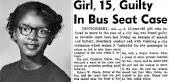
Claudette Colvin was born on September 5, 1939. On March 2, 1955, she was arrested at the age of 15 for not giving up her seat on a bus to a white woman.
The list of excuses for not highlighting Colvin’s story is extensive and focuses on the reputation that the movement was forced to remain “respectable” to the general public. Some additional known reasons were that she did not have good enough hair, her skin was “too dark,” she was a teenager, and she got pregnant at a young age while unmarried, which was not considered good for the media or the reputation of the Civil Rights movement itself. The leaders tried keeping up with appearances by having “the most appealing” protesters seen the most. Colvin did not fit their requirements.
Colvin, while not recognized for this when it occurred, would go on to be one of four plaintiffs in the 1956 Browder v. Gayle case, which led to the segregated buses of Montgomery, Alabama, being deemed unconstitutional.
After this case and Colvin’s impactful time with activism in Montgomery, she had trouble finding work in that area of Alabama, so she moved, with her son Raymond, to New York City, in 1958. This move and her issues in Montgomery also led to her dropping out of college.
However, after her move to New York City, she eventually found a job as an aide at a nursing home in 1969. She served as a nurse there for 35 years, retiring from her service in 2004.
Still alive, Colvin now has her story told alongside Parks’s story. On March 2, 2017, in Montgomery, Alabama, Claudette Colvin was recognized for her efforts, and this day is now named after her achievements and importance to civil rights and bus boycotts.
To make a difference, one must be willing to stand up to the crowd, and Colvin most-definitely did this.

{Editor’s Note: Information for this article was retrieved from Biography.com.}
 THE RETURN OF THE EYE